

SoundGentle hum
Common meaningNormal operation
Safe checkObserve only

Many refrigerator sounds are normal; new loud noises with cooling changes deserve attention.

Many refrigerator sounds are normal: humming from the compressor and fans, gurgling from refrigerant and defrost water, popping as the cabinet walls expand, and a single click when the compressor starts or stops. Rattling often traces to an unlevel cabinet or items on top. Grinding, squeaking from a door that rubs the cabinet, or a new noise that comes with poor cooling deserves a closer look.
This guide separates routine care from work that requires testing or disassembly. Do not bypass a lock, safety switch, or error message to keep an appliance running. Taking a few notes now can make the eventual diagnosis faster and more accurate.
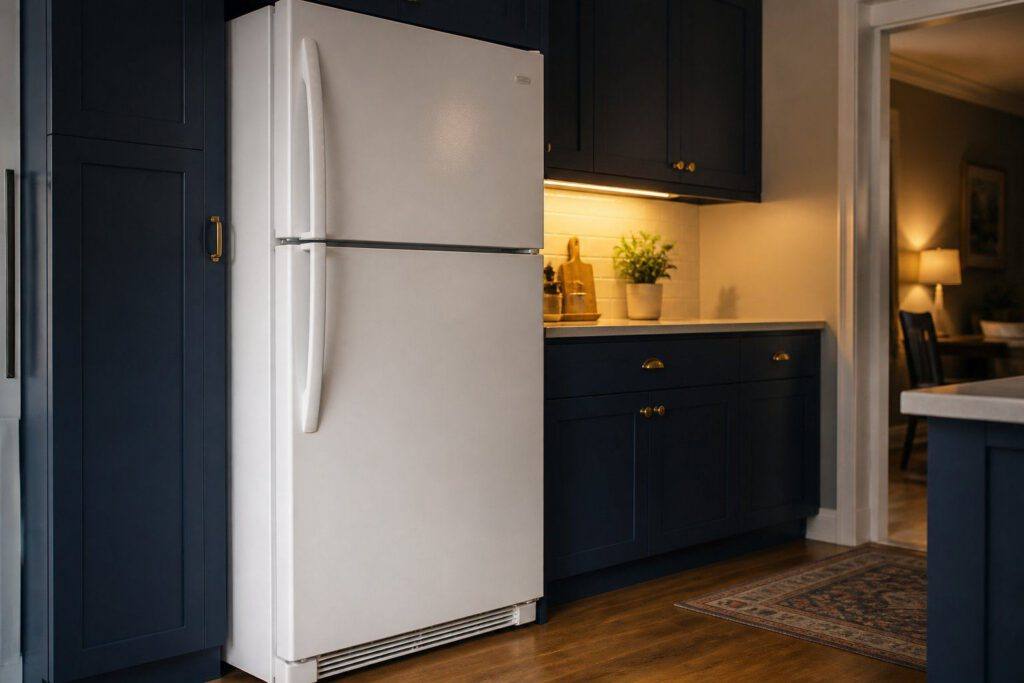
Move items away from the cabinet, confirm the refrigerator is level, and leave clearance so nothing behind or above it can vibrate. Make the check with the appliance in its normal position and without forcing panels, fittings, or controls. If the result changes after a simple adjustment, run one normal cycle or operation before drawing a conclusion. Also move anything resting on top of the cabinet, since loose items can hum along with the fans.
Hums, gurgles, clicks, and occasional pops can be normal, but persistent grinding or rattling paired with poor cooling is different. Look for a pattern: whether the issue happens every time, only with a particular load or setting, or after the appliance has been running for a while. That distinction is more valuable than repeatedly restarting the appliance.
Maytag support lists these everyday sounds as normal:
Consult the use-and-care manual for model-specific controls, filter access, and maintenance intervals. Clean only parts described as user-serviceable, use the recommended cleaning products, and refit every removable part exactly as it was designed to sit.
Before trying another cycle, clear obstructions, reduce an unusually heavy load, and make sure airflow, water supply, or door clearance is not being restricted. Avoid repeated resets: they can hide an intermittent fault and may leave water, heat, or pressure where it should not be.
Move items away from the cabinet, confirm the refrigerator is level, and leave clearance so nothing behind or above it can vibrate.
Only if there is no burning smell, smoke, sparking, gas odor, water near electricity, or other safety warning. Otherwise stop and arrange service.
Book a diagnosis when the safe checks above do not resolve an unusually noisy refrigerator, or when the next step would require opening the appliance or testing internal parts.
Share a few details and we’ll confirm an appointment. Prefer to talk? Call us and we’ll help right away.