

SymptomTwo cycles needed
Likely causeLint restriction
Safe checkClean screen

Slow Maytag dryer cycles often trace back to restricted airflow. Start with these safe checks.

A dryer that takes too long to dry points first to airflow: a clogged lint screen, a restricted or crushed vent, or an overfilled drum that keeps moist air in the cabinet. Clean the screen, check the visible vent, and try a smaller load before anything else. If there is no heat at all, or long dry times persist after cleaning, book a diagnosis.
This guide separates routine care from work that requires testing or disassembly. Do not bypass a lock, safety switch, or error message to keep an appliance running. Taking a few notes now can make the eventual diagnosis faster and more accurate.
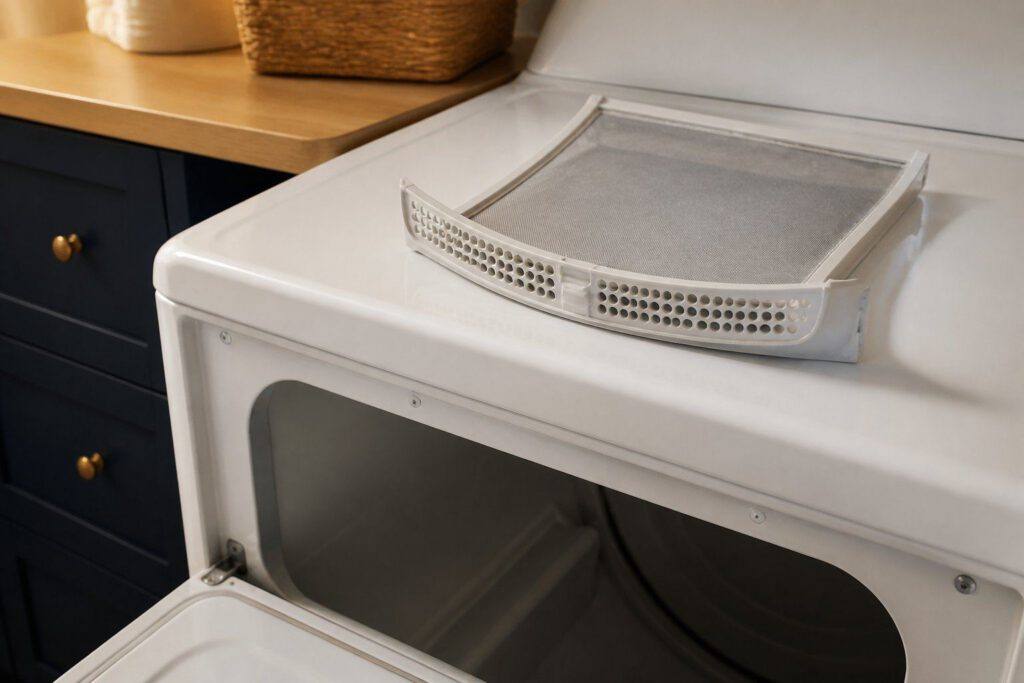
Clean the lint screen, reduce an overloaded drum, and inspect the visible vent hose for crushing or sharp kinks. Make the check with the appliance in its normal position and without forcing panels, fittings, or controls. If the result changes after a simple adjustment, run one normal cycle or operation before drawing a conclusion. Remove lint with your fingers rather than rinsing the screen, since wet lint is harder to clear.
Long cycles, hotter-than-normal laundry, and a weak exterior vent flap all suggest that moist air is not leaving efficiently. Look for a pattern: whether the issue happens every time, only with a particular load or setting, or after the appliance has been running for a while. That distinction is more valuable than repeatedly restarting the appliance.
Maytag describes a simple split: run a heated cycle with the drum empty for 5 minutes, then open the door and feel for heat. Warm air with long dry times points toward airflow, load size, or settings. No heat is a different problem. Electric dryers typically use a 240 V outlet with two breakers, so confirm at the panel that both are on, and on a gas model confirm the gas valve is open.
Load size matters as well. Fill the drum about one-half to three-quarters full, dry similar fabrics together, and run bulky items alone. Heavy items packed tight cannot tumble, which keeps hot air from reaching every layer.
Consult the use-and-care manual for model-specific controls, filter access, and maintenance intervals. Clean only parts described as user-serviceable, use the recommended cleaning products, and refit every removable part exactly as it was designed to sit.
Before trying another cycle, clear obstructions, reduce an unusually heavy load, and make sure airflow, water supply, or door clearance is not being restricted. Avoid repeated resets: they can hide an intermittent fault and may leave water, heat, or pressure where it should not be.
Clean the lint screen, reduce an overloaded drum, and inspect the visible vent hose for crushing or sharp kinks.
Only if there is no burning smell, smoke, sparking, gas odor, water near electricity, or other safety warning. Otherwise stop and arrange service.
Book a diagnosis when the safe checks above do not resolve a maytag dryer taking too long, or when the next step would require opening the appliance or testing internal parts.
Share a few details and we’ll confirm an appointment. Prefer to talk? Call us and we’ll help right away.